
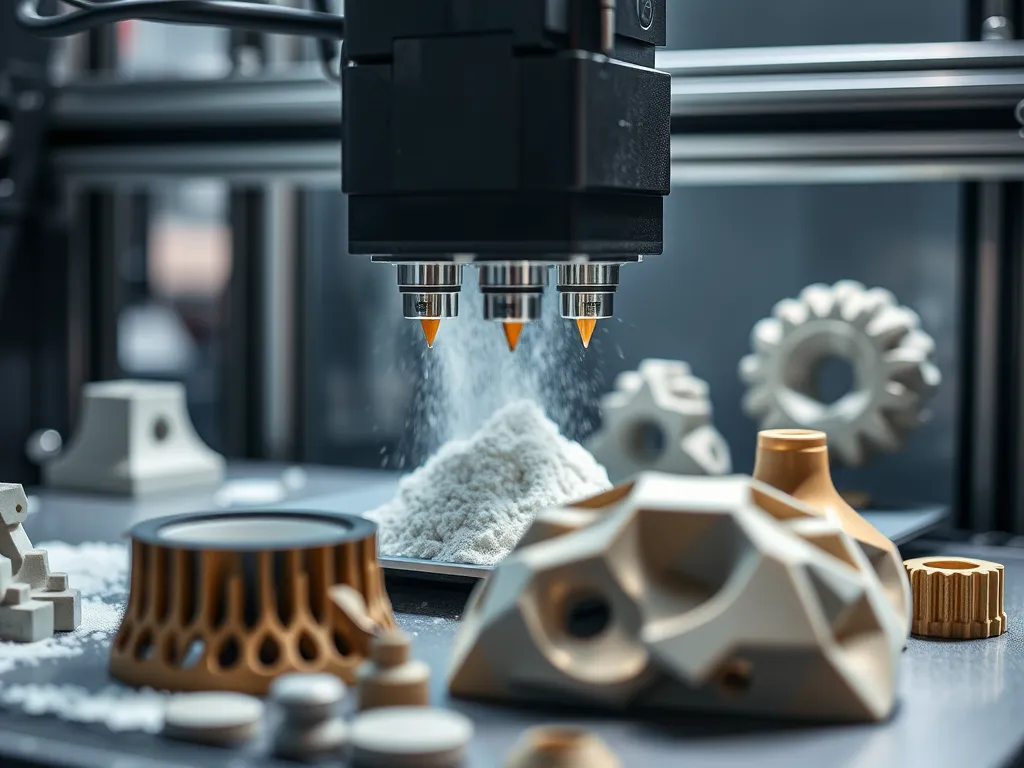
Binder jetting 3D printing, also known as binder jetting additive manufacturing, is a revolutionary technology that has the potential to transform multiple industries by enabling rapid and cost-effective production of complex, functional, and customized objects. With its unique approach to 3D printing, binder jetting offers a range of benefits that are not possible with traditional manufacturing methods.
In binder jetting 3D printing, a powdered material, typically metal or ceramic, is selectively deposited and bound together using a liquid binder. The process involves the following steps: layer-by-layer deposition of the powder, selective application of the binder using inkjet print heads, curing of the binder to form solid bonds, and the removal of excess powder. This process results in the creation of intricate, high-resolution 3D objects with great accuracy and minimal waste.
One of the key advantages of binder jetting is its ability to create complex geometries that would be challenging or impossible to produce using conventional manufacturing techniques. The layer-by-layer deposition of the powder allows for precise control over the shape and structure of the object. This means that designers and engineers can create parts with intricate details, internal channels, and intricate shapes that would be unattainable through traditional methods like machining or casting.
Furthermore, binder jetting also offers outstanding material versatility. It is compatible with a wide range of materials, including metals, ceramics, and even composite materials. This opens up the potential for manufacturing objects with unique properties such as high strength, heat resistance, electrical conductivity, and more. The ability to work with multiple materials allows for the creation of hybrid objects that combine the properties of different materials in a single part, opening up new possibilities for product design and engineering.
Another notable advantage of binder jetting is its speed and cost-effectiveness. The process is highly automated, allowing for rapid production without the need for extensive manual labor. Additionally, the ability to print multiple objects in a single build enhances efficiency and reduces overall production costs. This makes binder jetting particularly suitable for large-scale manufacturing applications, where high volumes of parts need to be produced quickly, such as in the automotive, aerospace, and medical industries.
Binder jetting 3D printing also offers sustainability benefits. Compared to traditional manufacturing processes, such as subtractive manufacturing or casting, the amount of material waste is significantly reduced. The excess powder can be collected, recycled, and reused, minimizing the environmental impact. Additionally, with its ability to produce objects on demand and in smaller quantities, binder jetting reduces overproduction and enables a more sustainable and efficient supply chain.
Despite its many advantages, binder jetting 3D printing also has its limitations. The resolution of the printed objects, while highly precise, may not match the level of detail achievable with other 3D printing methods such as stereolithography or selective laser sintering. Additionally, post-processing steps like sintering or infiltration may be required to achieve the desired mechanical properties in the final part, adding to the overall production time and cost.
Nevertheless, binder jetting 3D printing has already found numerous applications across various industries. In the aerospace sector, it is used to manufacture lightweight and complex parts, reducing weight and fuel consumption. In the medical field, it enables the production of custom implants and prosthetics, tailored to a patient’s specific needs. In the automotive industry, it offers the potential to reduce vehicle weight and optimize component design, improving fuel efficiency. These are just a few examples of how binder jetting is revolutionizing manufacturing across different sectors.
As with any emerging technology, further advancements and developments in binder jetting 3D printing will continue to expand its capabilities, improve process efficiency, and increase material options. As the technology continues to mature, we can expect to see more widespread adoption and integration of binder jetting in industries ranging from consumer goods to electronics, architecture, and beyond. The future of manufacturing is undoubtedly being reshaped by the incredible possibilities offered by binder jetting 3D printing.