
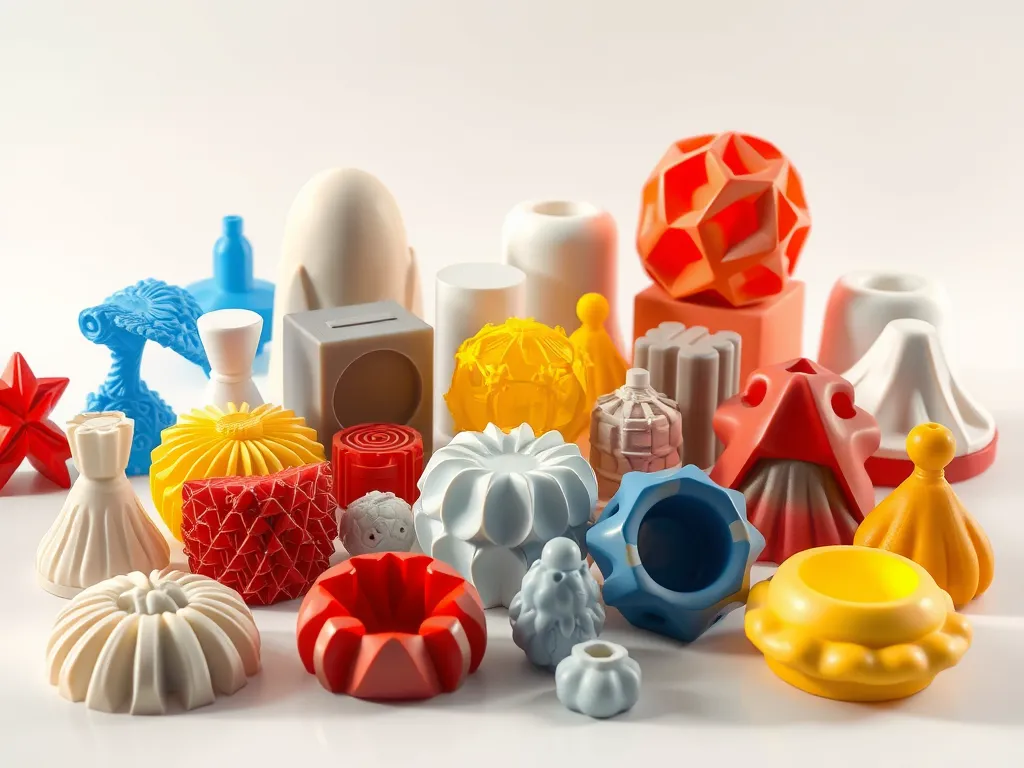
In recent years, 3D printing has revolutionized various industries, spanning from manufacturing to healthcare, and even fashion and art. Also known as additive manufacturing, the concept of 3D printing involves creating three-dimensional physical objects using a layer-by-layer approach. With rapid advancements in technology, a multitude of 3D printing techniques have emerged, each suited for specific applications and materials. Let’s delve into the details of some of the most notable types of 3D printing.
-
Fused Deposition Modeling (FDM): Fused Deposition Modeling, also known as Fused Filament Fabrication (FFF), is one of the most common 3D printing technologies available today. FDM printers utilize a thermoplastic filament that is fed through a heated extruder. The extruder melts the filament, which is then precisely laid down layer by layer, building the object from the bottom up. FDM is known for its reliability, cost-effectiveness, and suitability for prototyping and producing functional parts.
-
Stereolithography (SLA): Stereolithography was the first-ever 3D printing technology invented and remains a popular choice today. SLA printers work by using a UV laser to solidify liquid resin, layer by layer, creating highly detailed and accurate objects with smooth finishes. It is often used for producing intricate designs, dental models, and investment casting patterns. SLA offers excellent precision but can be relatively expensive due to the cost of the specialized resin.
-
Digital Light Processing (DLP): Digital Light Processing is similar to SLA, but instead of using a UV laser, it employs a digital light projector to cure liquid resin. The projector exposes each layer of the resin simultaneously, increasing the speed of the printing process compared to SLA. DLP printing offers high-resolution and accuracy, making it ideal for applications such as jewelry, dental models, and engineering prototypes.
-
Selective Laser Sintering (SLS): Selective Laser Sintering employs a high-powered laser to fuse powdered materials, such as metals, thermoplastics, or ceramics, layer by layer. The laser selectively melts the particles using a computer-controlled scanning system, forming a solid object. SLS offers vast material choices and does not require support structures, ultimately minimizing waste. Its applications extend to producing end-use parts for aerospace, automotive, and medical industries.
-
Electron Beam Melting (EBM): EBM is a method specifically used for 3D printing metallic objects. It utilizes an electron beam to melt metal powder in a high vacuum environment. By selectively melting the powder, layer by layer, complex and fully dense metal designs can be created. EBM is highly suitable for manufacturing high-strength, heat-resistant components used in aerospace, orthopedics, and turbine production.
-
Binder Jetting: Binder Jetting is an additive manufacturing process that uses a liquid binding agent to bind particulate material together. The process involves depositing layers of powder onto a build platform and applying the binding agent using an inkjet printhead. This technique offers a wide range of materials, including metals, ceramics, and composites. Binder Jetting is commonly used for producing intricate metal components, sand casting molds, and architectural models.
Conclusion: The world of 3D printing encompasses numerous techniques, each catering to specific applications, materials, and precision requirements. From FDM’s affordability and ease of use to SLA’s precision and surface finish, and from SLS’s versatility with materials to EBM’s high-strength metal production capabilities, there is a 3D printing technique to meet virtually any manufacturing need. As technology continues to evolve, the possibilities and benefits of 3D printing are expanding, promising an exciting future with endless possibilities.