
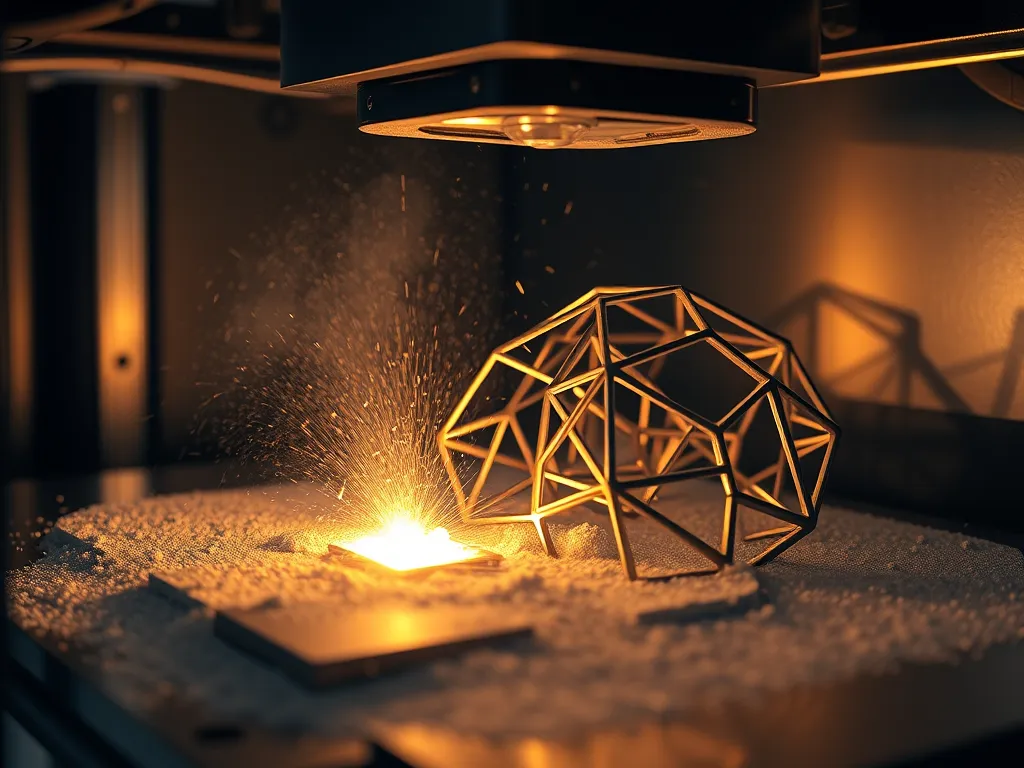
Electron Beam Melting (EBM) is an innovative additive manufacturing process that utilizes high-powered electron beams to melt and fuse metal powders to create complex geometric shapes. With its ability to produce fully dense and near-net-shape parts, EBM is gaining significant attention and becoming an integral part of various industries, including aerospace, medical, and automotive.
The EBM process begins with the preparation of a 3D computer-aided design (CAD) model, which is sliced into thin cross-sectional layers. These layers are then transferred to the EBM machine, where a thin layer of metal powder is spread over a build platform. The electron beam is precisely controlled and focused onto the metal powder bed, causing the temperature to rise rapidly and melt the powder selectively according to the digital design.
One of the major advantages of EBM is its high build speed. The electron beam can rapidly scan large areas, melting the powder in layers as thin as 50 micrometers. This results in faster production times compared to other additive manufacturing processes like selective laser melting (SLM). Additionally, the high build speed reduces the risk of thermal distortion, ensuring dimensional accuracy throughout the printing process.
Another notable advantage of EBM is its ability to produce highly complex and intricate structures. The electron beam can access tight spaces and produce overhangs and undercuts without the need for additional supports. This makes EBM particularly suitable for manufacturing complex internal features such as cooling channels in aerospace components or custom implants for medical applications.
The EBM process offers excellent material properties due to the high degree of melting achieved by the electron beam. The rapid solidification results in fine-grained microstructures, which increases the strength and integrity of the printed parts. Furthermore, the fully dense nature of EBM parts ensures they have high porosity resistance and exceptional fatigue performance. Materials commonly used in EBM include titanium alloys, stainless steels, and cobalt-chromium alloys.
Additionally, EBM enables the production of parts with a higher level of geometrical accuracy compared to conventional manufacturing methods. The layer-by-layer additive nature of EBM allows for the creation of complex geometries that cannot be easily achieved using traditional subtractive manufacturing. This opens new possibilities for design freedom and enhances product performance by allowing for optimized part designs.
Although EBM has numerous advantages, it also presents some challenges. The high energy electron beam can cause thermal stresses within the part, leading to residual stresses and distortion. Implementing strategies such as optimizing scanning patterns and controlling cooling can mitigate these issues to some extent. In addition, post-processing steps like stress relief annealing or hot isostatic pressing may be required to reduce residual stresses and achieve the desired dimensional accuracy.
Furthermore, as with any additive manufacturing process, the quality and reliability of the final part are heavily dependent on process parameters and material consistency. Ensuring a consistent powder feed, maintaining appropriate chamber conditions, and optimizing build parameters are critical to achieving reliable and repeatable results.
Despite these challenges, the advantages of EBM are driving its integration into several industries. In aerospace, EBM is used to produce lightweight components with complex internal geometries, reducing weight and improving fuel efficiency. In medical applications, EBM enables the creation of patient-specific implants with optimal fit and biofunctionality. In automotive manufacturing, EBM is utilized for rapid prototyping and low-volume production of custom parts.
In conclusion, Electron Beam Melting is a powerful additive manufacturing process that offers high build speed, complexity, material properties, and geometrical accuracy. With its ability to produce fully dense and near-net-shape parts, EBM is revolutionizing manufacturing across various industries. As research and development continue, EBM is likely to play an increasingly significant role in the future of additive manufacturing.