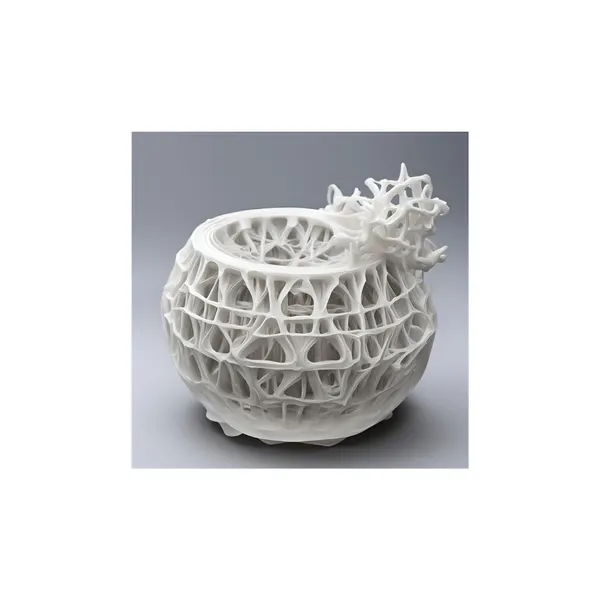
Small manufacturing businesses often think of themselves as being outside the main cyber security conversation. The imagery in cyber security marketing is bank vaults and hospital records; the reality of a 3D printing service, a small fabrication shop, a light manufacturer is closer to design files, customer orders, and production schedules. All three of those, however, are exactly the kind of information that attackers target, and the operational impact of an incident on a small manufacturer is often more severe than on a comparable office-based business.
Why manufacturers are actually attractive targets
Attackers do not target manufacturers because manufacturers are worth an unusually large ransom. They target them because manufacturers are often less prepared than similarly-sized office businesses, and because production downtime is expensive enough to make payment more likely.
A small services business hit by ransomware can, at worst, work from paper and phones for a few days. A small manufacturer hit by ransomware watches idle machines burn revenue by the hour, with delivery commitments to customers still counting down. The pressure to pay is genuinely higher, and attackers know this.
The data landscape on a production floor
A typical small manufacturer holds several categories of sensitive material. Customer design files, often under NDA. Bill of materials and pricing data. Production schedules and machine configurations. Employee payroll and personal data. Supplier contracts. Access credentials to industrial control systems.
The design files category is particularly relevant for 3D printing services and similar custom fabrication businesses. A leaked customer STL or CAD file can end the customer relationship instantly, and any suggestion of design file leakage will spread fast in the customer’s own industry.
What good enough looks like
A small manufacturer does not need enterprise cyber security. Meeting Essential Eight Maturity Level 1 addresses the most likely attack scenarios and is achievable in a few months of focused work. SMB1001 Bronze certification adds a governance wrap around it that is useful for customer conversations and cyber insurance renewals.
Practically, the high-value moves for a small manufacturer are the same ones every other Australian SMB should be doing. Enable MFA on every business account. Deploy a modern EDR product with either an in-house or managed SOC watching the alerts. Run tested backups that cover the ordering, quoting, scheduling and design file systems. Maintain a documented incident response plan. Segregate the office network from the production floor network. Run staff awareness training. Publish DMARC.
The production floor angle
Manufacturers have an additional set of concerns that office businesses do not. Industrial control systems (CNC controllers, 3D printer farms, laser cutters) often run outdated firmware and cannot be patched aggressively without risking production stability. Isolating these systems on a separate network, controlling who can reach them, and maintaining an inventory of what versions are running is a reasonable middle path.
The physical security of the production floor is also part of cyber posture in a way that does not apply to purely office environments. A USB drive plugged into a CNC controller by someone with physical access is a bypass of most network controls.
Assessing where you are today
The practical first step is a scored assessment of the current posture. A free assessment like CyberSafeCheck maps to the Essential Eight, ISO 27001, Privacy Act and SMB1001 and produces a scored PDF report identifying the gaps most worth addressing first. Running this before commissioning external cyber work means the spend goes to the highest-impact gaps rather than to a generic checklist.
The customer conversation
Manufacturing customers, particularly larger corporate or government customers, increasingly ask about the cyber posture of their suppliers as part of onboarding. A small manufacturer with a documented posture, a certification path, and a scored assessment behind them can answer these questions confidently. A small manufacturer without those artefacts finds these conversations awkward and sometimes losing.
The bottom line
Small manufacturers are not marginal targets in the cyber security landscape. The pressure to pay, the value of design files, and the operational cost of production downtime combine to make them attractive to attackers. The good news is that the same basic cyber hygiene that protects office businesses works for manufacturers, with a small number of production-floor-specific adjustments. A free posture assessment is the sensible first step toward knowing where the actual gaps are and closing them in a defensible order.