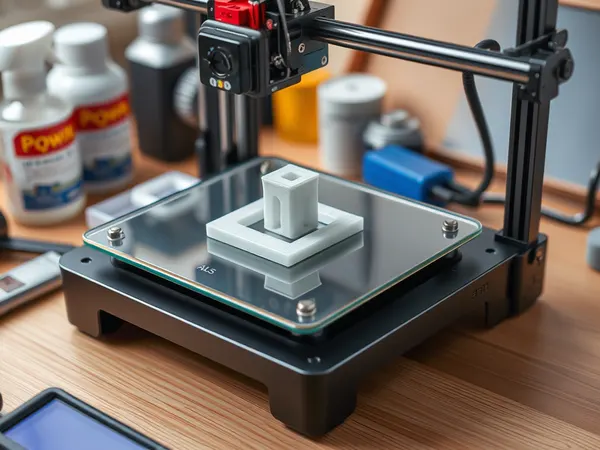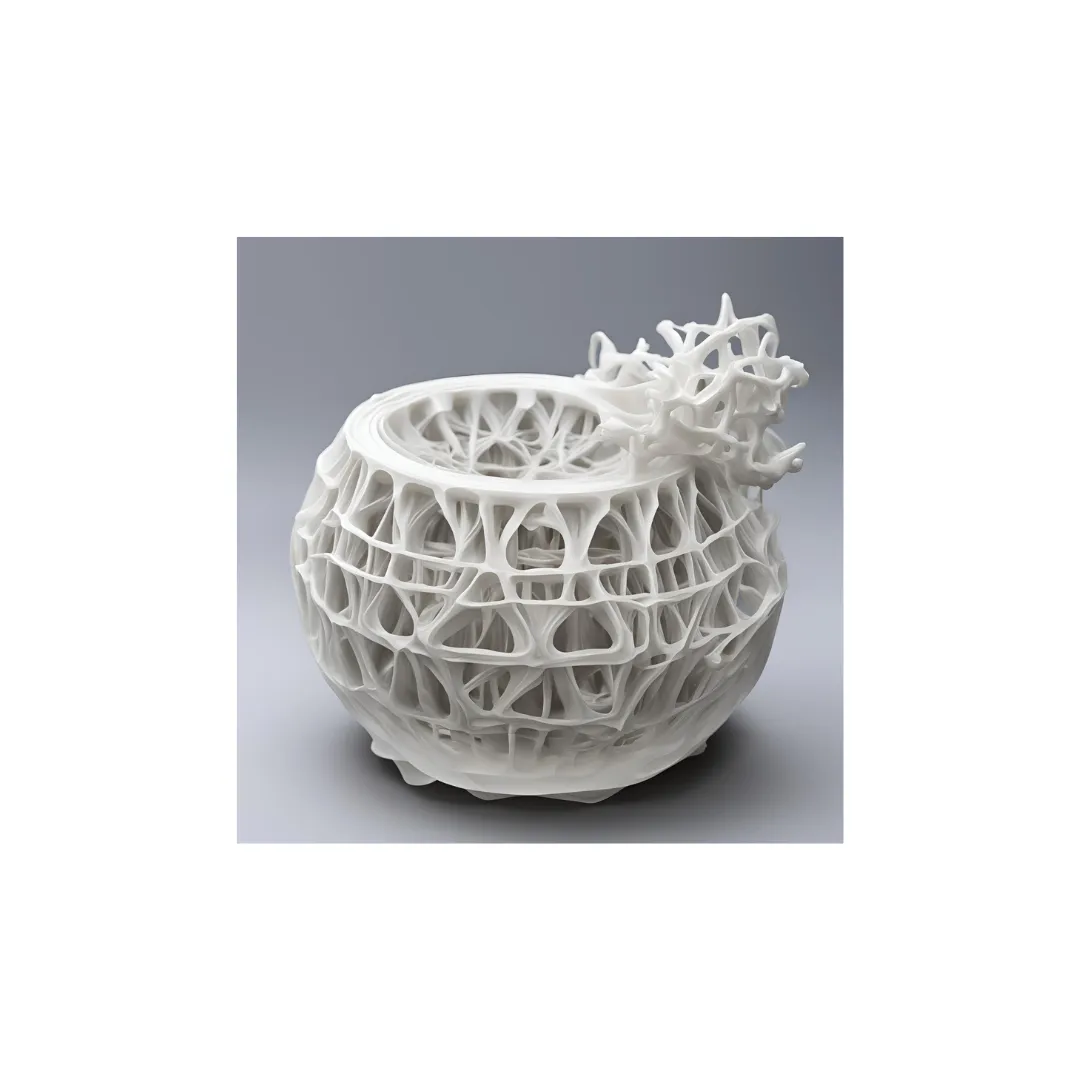
Stereolithography (SLA) has revolutionized the world of manufacturing and prototyping. It is a 3D printing technology that has paved the way for new possibilities in various industries. In this article, we will discuss the fundamentals, applications, advantages, and challenges associated with SLA.
Fundamentals of SLA: SLA is an additive manufacturing process that uses a vat of liquid photopolymer resin and an ultraviolet (UV) laser to create solid, highly detailed objects layer by layer. The process begins with a 3D model, which is sliced into thin layers by specialized software. The build platform is submerged into the liquid resin, and each layer is selectively exposed to UV light, causing the resin to solidify. The build platform then moves up, and a new layer of resin is spread, repeating the process until the entire object is formed. Once the printing is complete, the object is rinsed with a solvent to remove excess resin, and then cured under UV light to further enhance its strength and stability.
Applications of SLA: SLA has found its applications in various industries due to its accuracy and ability to create complex geometries. In the automotive industry, it has been used for rapid prototyping of engine components, interior parts, and even entire vehicle models. This speeds up the design process and reduces cost. In the medical field, SLA is utilized to create customized implants, surgical guides, and anatomical models for preoperative planning. Jewelry designers take advantage of SLA to create intricate and delicate pieces that would be difficult to achieve through traditional methods. Architecture firms also use SLA to produce detailed models and 3D visualizations of their designs. The versatility of SLA makes it an ideal choice for many industries where precision and intricacy are needed.
Advantages of SLA: One of the key advantages of SLA is its ability to produce highly detailed and accurate parts. With layer thicknesses as small as 25 micrometers, SLA is capable of creating intricate features and fine details that other 3D printing technologies may struggle with. Furthermore, SLA can achieve smooth surface finishes, eliminating the need for extensive post-processing. This is particularly beneficial for industries that require aesthetically pleasing prototypes or end-use parts, such as consumer products or medical devices. SLA is also known for its speed compared to other 3D printing technologies. While the production time may vary depending on the size and complexity of the object, SLA is generally faster than techniques like selective laser sintering (SLS) or fused deposition modeling (FDM).
Challenges of SLA: Despite its many advantages, SLA does come with a few challenges. One of the main limitations is the relatively high cost of the resin materials required for printing. These resins can be expensive, especially if specialized materials are needed, such as those with high-temperature resistance or biocompatibility. Another challenge is the post-processing requirements. SLA parts need to be properly cleaned and post-cured to achieve their maximum mechanical properties. This adds extra time to the overall production process. Additionally, SLA is not the most suitable technique for large-scale production due to its limited build volume and slower printing speed compared to some other 3D printing technologies.
In conclusion, Stereolithography (SLA) has revolutionized the field of manufacturing and prototyping. Its ability to create highly detailed objects with exceptional accuracy and smooth surface finishes has made it indispensable in various industries. While there are challenges associated with SLA, its numerous advantages make it a valuable tool for rapid prototyping, product development, and creating intricate end-use parts. With ongoing advancements in materials and technology, SLA is likely to continue pushing the boundaries of what is possible in additive manufacturing.
Our own resin 3D printing service uses DLP, a close relative of SLA that cures a whole layer at once with projected light rather than tracing it with a laser. It suits miniatures and small detailed parts.