The realm of 3D printing has been rapidly expanding, making advancements across various industries. Metal 3D printing, in particular, has garnered immense interest due to its potential to revolutionize the fabrication industry. Among the various metal 3D printing techniques, Fused Deposition Modeling (FDM) has emerged as a noteworthy method, offering its own unique advantages.
What is FDM Metal 3D Printing? Fused Deposition Modeling, originally developed by Stratasys in the late 1980s, is a popular method for creating objects by extruding thermoplastic materials layer by layer. This technique has been predominantly used in the production of plastic prototypes and end-use parts. However, recently, FDM has expanded its applications to include metal materials as well.
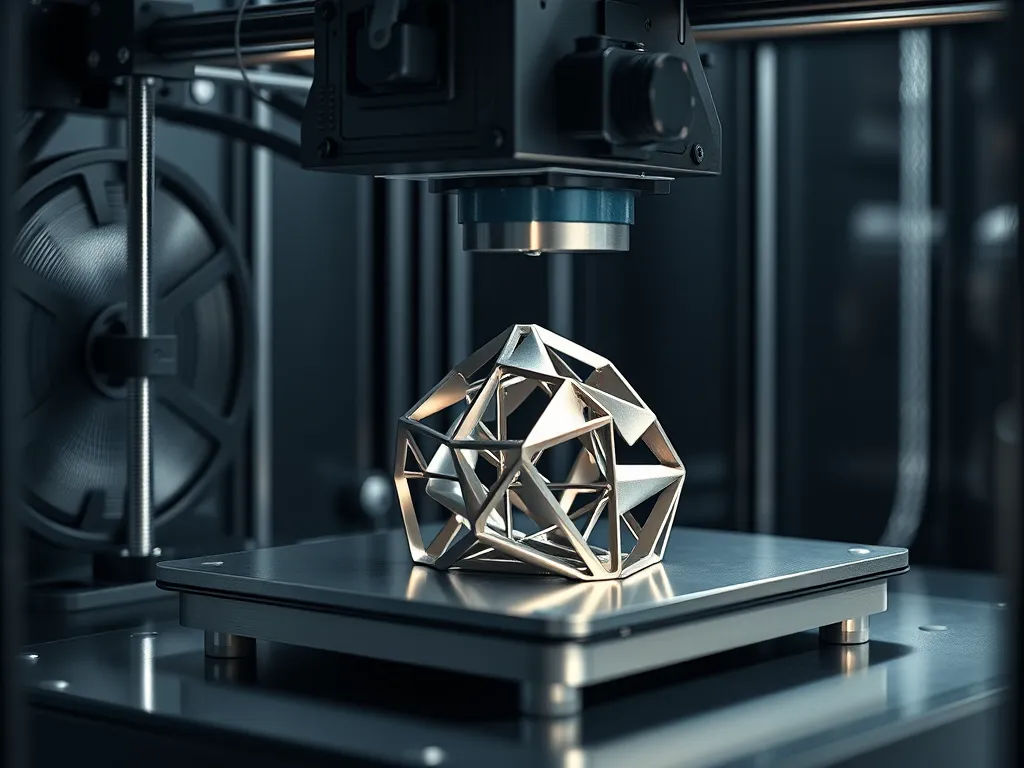
The Operation of FDM Metal 3D Printing: The process of FDM metal 3D printing involves fusing metal filaments, typically consisting of a mixture of powdered metal with a thermoplastic binder, layer by layer. These filaments are loaded onto a printer that features a heated nozzle. The nozzle melts the filament and deposits it onto a print bed, where it solidifies to form the desired shape. Once a layer is complete, the print bed moves down, and the process is repeated for subsequent layers until the entire object is formed.
Advantages of FDM Metal 3D Printing:
-
Cost-effectiveness: FDM metal 3D printing offers significant cost advantages compared to traditional metal fabrication methods. The utilization of metal-infused filaments reduces the cost of raw materials, making it an attractive option for small-scale production or prototyping.
-
Design Flexibility: FDM metal 3D printing allows for intricate designs with complex geometries that may be difficult or impossible to manufacture using traditional techniques. This freedom enables engineers and designers to create components with improved performance, reduced weight, and enhanced functionality.
-
Reduced Waste: Conventional metal fabrication methods often generate substantial amounts of waste material. FDM metal 3D printing eliminates much of this waste by allowing for precise deposition of material only where it is required, resulting in improved resource efficiency and reduced environmental impact.
-
Time Savings: FDM metal 3D printing significantly reduces the time required for design iterations and product development cycles. Prototypes can be produced swiftly, allowing for rapid design refinement and accelerated time-to-market.
-
Scalability: FDM metal 3D printing offers scalability options, enabling manufacturers to scale up or down production as needed. This versatility makes it well-suited for both small-batch production runs and mass customization.
Limitations and Challenges: Like any emerging technology, FDM metal 3D printing also faces certain limitations and challenges that need to be addressed for wider adoption.
-
Limited Material Choices: Currently, the range of available metal-infused filaments for FDM metal 3D printing is limited compared to conventional metal options. However, ongoing research and development are expanding these possibilities.
-
Surface Finishing: Objects produced using FDM metal 3D printing often require post-processing to attain desired surface finishes. Additional steps such as sanding, polishing, or coating may be necessary for certain applications.
-
Mechanical Strength: FDM metal 3D printed parts typically have lower mechanical strength compared to parts produced through traditional manufacturing methods. However, continuous advancements in material formulations and printer technology are addressing these challenges.
Applications of FDM Metal 3D Printing: FDM metal 3D printing is finding applications in various fields, including aerospace, automotive, medical, and consumer goods. Some notable applications include:
-
Prototyping: FDM metal 3D printing allows for rapid prototyping of metal components, enabling designers to validate concepts and test form, fit, and function.
-
Customization: The ability to create complex metal parts with unique geometries makes FDM metal 3D printing ideal for customization-based applications, such as jewelry and personalized medical implants.
-
Tooling and Fixtures: FDM metal 3D printing offers a cost-effective solution for producing custom tooling and fixtures used in industrial manufacturing processes. This reduces lead times and lowers tooling costs.
-
Low-Volume Production: FDM metal 3D printing is increasingly being adopted for low-volume production of specialized parts, eliminating the need for expensive molds or dies.
Conclusion: Fused Deposition Modeling (FDM) metal 3D printing represents an exciting frontier in the world of additive manufacturing. With its cost-effectiveness, design flexibility, and scalability, it has the potential to disrupt traditional metal fabrication methods. While current limitations and challenges exist, ongoing technological advancements and material innovations are pushing the boundaries, making FDM metal 3D printing an increasingly viable option for a wide range of applications.