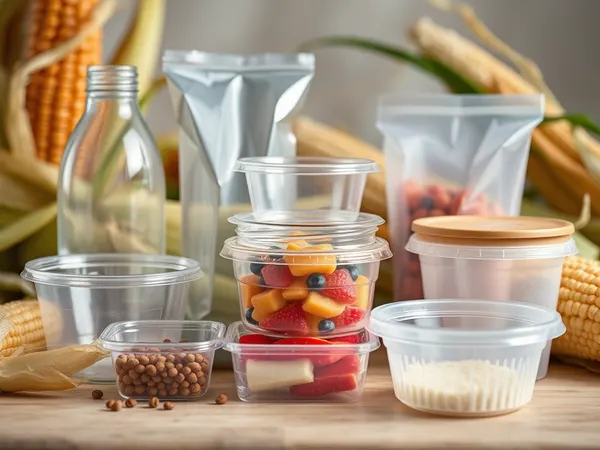
PLA filament has changed 3D printing with its plant-based origins and easy printing. In this article we follow how PLA filament is made, from the crop in the field to the spool on the printer.
PLA, short for polylactic acid, is made from renewable resources rather than oil, which makes it a more sustainable alternative to traditional petroleum-based plastics. In outline: plant starch, mostly from corn, sugar cane or cassava, is broken down into sugar; the sugar is fermented into lactic acid; and the lactic acid is polymerised (joined into long chains) to make the plastic. The plastic is then melted and drawn into filament.
Step 1: Growing the raw materials
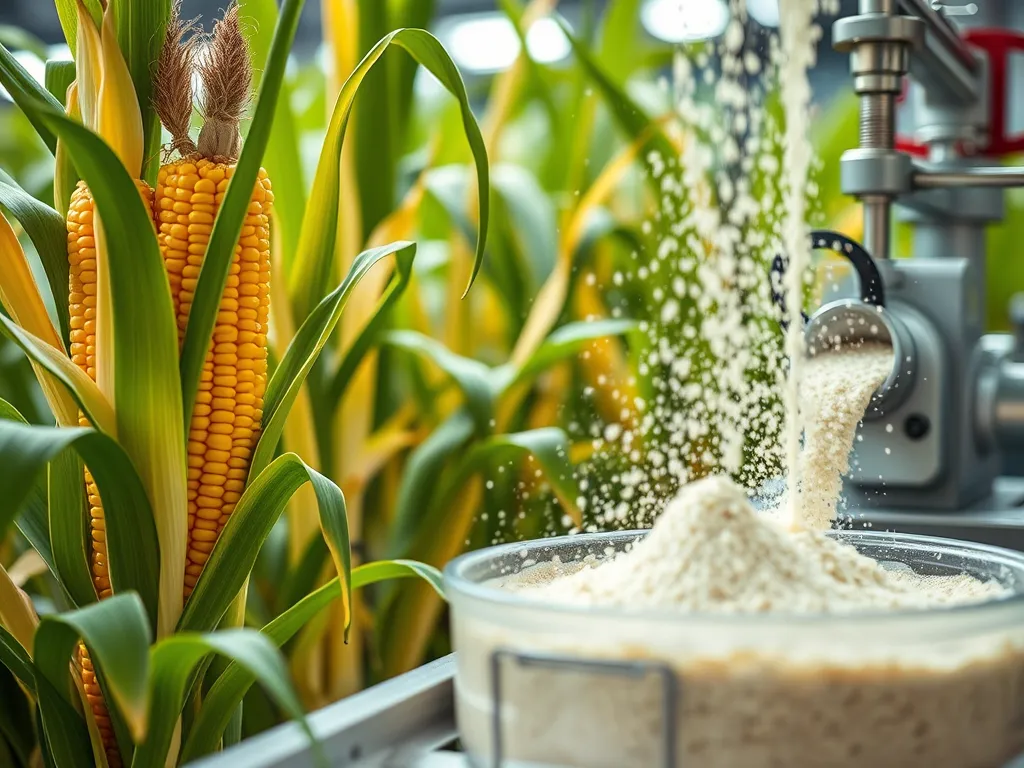
The process starts on the farm. Crops rich in starch or sugar, such as corn, sugar cane or cassava, are grown and harvested. Once harvested, the plants are processed to extract the starch or sugar that will become the basis for lactic acid.
Step 2: Extracting starch and turning it into sugar
The harvested plants are ground and mixed with water to form a slurry, and the starch is separated out. Enzymes are then added to break the starch down into simple sugars, mainly glucose. The sugar solution is purified and filtered to remove impurities and solid particles. (With sugar cane, the sugar is already there, so this step is simpler.)
Step 3: Fermenting sugar into lactic acid
Next comes fermentation. Lactic acid bacteria are added to the sugar solution in large fermentation tanks, where they consume the sugar and produce lactic acid, much as they do when making yoghurt. Conditions such as temperature and acidity are carefully controlled so the bacteria work efficiently.
Step 4: Purifying the lactic acid
After fermentation, the lactic acid is separated from the broth and purified to remove water, leftover sugars, bacteria and other by-products. High purity matters here: impurities would stop the molecules linking into long, strong chains in the next step.
Step 5: Polymerisation into PLA
Polymerisation is where lactic acid becomes plastic. The most common industrial route first converts lactic acid into lactide, a small ring-shaped molecule made from two lactic acid units. The lactide is then heated in a reactor with a catalyst, which opens the rings and links them into very long chains. Those long chains are PLA.
The finished polymer is usually formed into small pellets, which are what filament makers buy.
Step 6: Extruding the filament
To make 3D printing filament, the PLA pellets are first dried, because PLA absorbs moisture from the air and damp PLA prints poorly. Colourants and any additives are mixed in at this stage, which is why the same base plastic can become silk, matte, glow-in-the-dark or wood-filled filament.
The pellets are fed into an extruder, which melts them and pushes the molten plastic through a small round die to form a continuous strand. The diameter is controlled tightly, usually to 1.75 mm or 2.85 mm.
Step 7: Cooling and spooling
The hot strand is cooled quickly, usually by passing it through a water bath, so it solidifies evenly without distorting. The filament’s diameter is measured continuously as it runs, and then it is wound onto a spool, sealed with a desiccant to keep it dry, and packed for sale.
Step 8: Quality control
Filament makers test their product before it reaches the market. Checks typically include diameter and roundness along the length, colour consistency, strength and flexibility, and moisture content. Consistent diameter matters most for 3D printing: if it varies, the printer pushes out too much or too little plastic and print quality suffers.
Why this matters when you print with PLA
The way PLA is made explains how it behaves on the printer. It melts at fairly low temperatures, so it is easy to print and holds fine detail. It softens at fairly low temperatures too, so PLA parts are not for hot places. It absorbs moisture, so spools need to be stored dry. And its colour and finish come from what is added during extrusion. Our article on PLA in 3D printing covers these properties in more detail, and food-safe PLA in 3D printing explains what it takes for PLA to be used with food.
In summary
PLA filament starts as a crop. The starch is converted into sugar, the sugar is fermented into lactic acid, and the lactic acid is polymerised into PLA. The PLA is then dried, coloured, extruded, cooled and wound onto spools. With its renewable origins and easy printing, PLA remains the most widely used material in desktop 3D printing.
If you would rather have PLA parts made than make them yourself, our online 3D printing service prints in standard, silk, matte, glow-in-the-dark and special PLA. Upload your model and you will see the price in seconds.