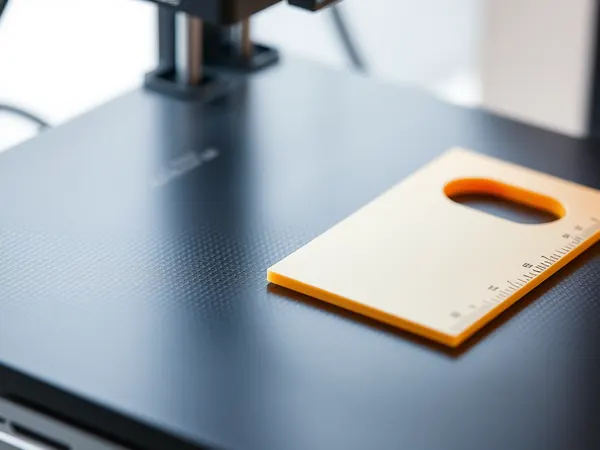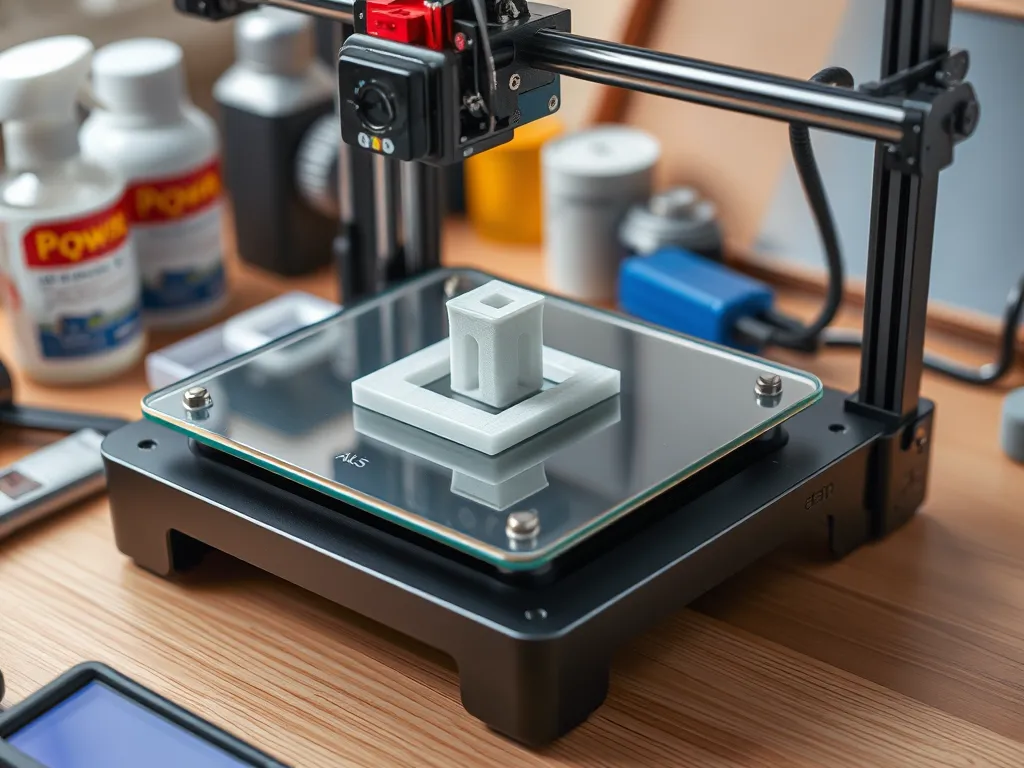
ABS is strong, tough and handles heat far better than PLA, but it has a reputation for one thing above all: it does not want to stay stuck to the bed. Corners curl up, the first layer peels away halfway through the print, or the whole part lets go and ends up dragged around by the nozzle.
This guide starts with ABS, because it is the hardest common filament to keep on the bed, and works through the causes in the order they usually matter. The second half covers bed adhesion problems with other filaments such as PLA and PETG, because the same basics apply.
Why ABS lifts off the bed
ABS shrinks noticeably as it cools. Each new layer is laid down hot on top of layers that have already cooled and shrunk, so the part is constantly pulling inward on itself. The pull is strongest at the corners and edges, and if it is stronger than the grip between the first layer and the bed, the corners lift. That is warping, and it is the root of almost every ABS bed adhesion problem.
So there are two ways to fix it: grip the bed harder, and reduce the pull by keeping the part warm and evenly cooled. The fixes below do one or both.
1. Bed temperature
ABS needs a hot bed, typically 90 to 110°C. Below that, the first layer cools too far, shrinks and loses its grip. If your bed struggles to reach 100°C, or takes a long time to get there, that alone can explain your problems.
Let the bed heat soak for a few minutes after it reaches temperature, so the whole plate is evenly hot, not just the area over the sensor.
2. Drafts, cooling and enclosures
Uneven cooling is the second big cause. A draft from a window, an air conditioner or a ceiling fan cools one side of the part faster than the other, and that side lifts.
- Use an enclosure. A simple enclosure keeps the air around the part warm and still, which cuts shrinkage dramatically. It is the single most effective fix for ABS warping.
- Turn the part cooling fan off or right down for ABS, at least for the first several layers.
- Keep the printer away from drafts, open doors and air conditioning vents.
3. The first layer
The first layer needs to be pressed firmly onto the bed, not just laid on top of it.
- Level the bed and set the nozzle height correctly. If the nozzle is too high, the first layer sits in round beads that barely touch the bed. If it is too low, the nozzle scrapes and the extrusion is starved. Our guide to troubleshooting bed leveling issues covers this in detail.
- Slow the first layer down. A slower first layer gives the plastic time to bond.
- Use a slightly thicker first layer and a little extra width. Both give more contact area and are more forgiving of a bed that is not perfectly flat.
4. The bed surface
A clean, suitable surface makes a big difference.
- Clean the bed with isopropyl alcohol before each print. Fingerprints leave oils that ABS will not stick to.
- PEI sheets grip ABS well when hot, and release the part once they cool.
- Kapton tape is a traditional ABS surface on glass or aluminium beds.
- Glue stick or a purpose-made adhesive adds grip on glass.
- ABS slurry (sometimes called ABS juice), made by dissolving scraps of ABS in acetone and brushing a thin coat on the bed, gives ABS something to bond to. Use it with good ventilation, and keep acetone away from surfaces it can damage.
5. Brims, rafts and part design
- Add a brim. A brim is a few extra lines around the base of the part. It gives the corners a larger footprint to hold on with, and it trims off afterwards.
- Use a raft for small or awkward footprints. It prints a base underneath the part, at the cost of a rougher bottom surface.
- Round off sharp corners in the design where you can. Sharp corners concentrate the pull. Small discs at the corners (sometimes called mouse ears) work like a local brim.
- Orient the part so the largest flat face sits on the bed.
ABS bed adhesion checklist
| Symptom | Likely cause | First thing to try |
|---|---|---|
| Corners curl up after a few layers | Shrinkage and uneven cooling | Enclosure, fan off, brim |
| First layer will not stick at all | Nozzle too high, dirty bed, bed too cool | Re-level, clean with alcohol, check bed temperature |
| Part lets go halfway through | Warping has overcome the grip | Enclosure, brim, better bed surface |
| One side lifts, other side is fine | Draft or uneven bed heat | Move away from drafts, let the bed heat soak |
| Layers split on tall parts | Cold air cooling upper layers | Enclosure, less cooling |
Bed adhesion with other filaments
The basics carry over to every filament: a level bed, the right nozzle height, a clean surface and a sensible bed temperature. The details differ.
- PLA shrinks much less than ABS and sticks well to most surfaces. A bed at around 60°C, a clean surface and a correct first layer usually solve the problem. If PLA will not stick, the cause is almost always the nozzle height or a dirty bed.
- PETG can stick too well, especially to smooth PEI and glass, and can pull chunks out of the surface when you remove the part. A thin layer of glue stick works as a release layer. PETG also prefers the nozzle slightly higher than PLA for the first layer.
- Nylon warps and absorbs moisture from the air, so it needs dry filament as well as good adhesion. Our article on issues with 3D printing in nylon covers it.
- TPU and other flexible filaments usually stick easily, but go slowly.
Whatever the filament, change one thing at a time and do a short test print. It is the quickest way to find out which fix actually worked.
When it is not worth the fight
Sometimes the easiest fix is not printing the part yourself. ABS is not in our instant quote at the moment, but many parts can be made in PLA instead. If yours can, you can upload your model to our online 3D printing service and see a price in seconds, and we will handle the printing.